

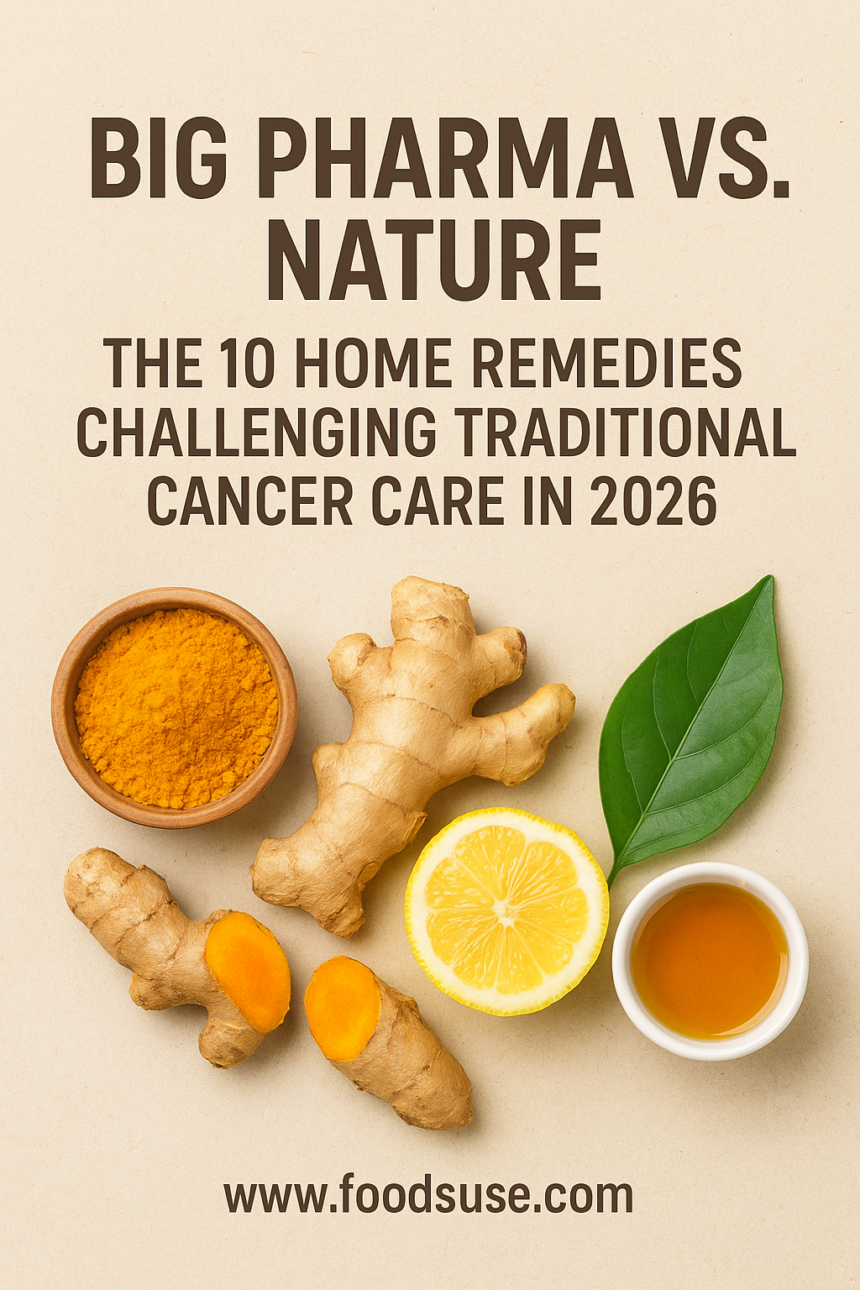
In 2026, one of the biggest global debates continues to intensify: Are natural remedies gaining influence because they truly help — or because people are losing trust in Big Pharma?
While medical experts insist that no home remedy can cure cancer, millions of patients and families around the world are still turning to natural options for support, comfort, symptom relief, and a sense of control.
This clash — Big Pharma vs. Nature — has become one of the most controversial health topics of 2026 across Canada, the USA, the UK, Australia, and the UAE.
Below is a deep dive into the 10 home remedies people are using, why they are trending, what science says, and why this public debate is growing louder than ever.
1. Turmeric & Curcumin: The Anti-Inflammatory Giant
Curcumin, the compound in turmeric, is widely researched for its anti-inflammatory and antioxidant properties.
People in 2026 believe it:
-
supports immune health
-
reduces inflammation
-
helps improve overall wellness during treatment
What experts say:
Curcumin is well-studied, but not a cure. However, it may be helpful as a supportive supplement when approved by a doctor.
Why it’s controversial:
Many patients believe it “does more than Big Pharma admits,” fueling online debates and viral claims.
Related Topic>>
- 10 Home Remedies People Believe Can Fight Cancer in 2025/2026 — What Experts Say
- home remedies for cancer symptoms
- Why Ultra-Processed Foods Are Quietly Ruining Your Health in the U.S. and UK
2. Ginger & Raw Honey Mixtures
A powerful natural pairing trending around the world.
Many believe this mixture:
-
helps nausea
-
reduces oxidative stress
-
boosts natural immunity
The science:
Research supports ginger’s ability to ease nausea from chemotherapy. Honey contains antioxidants — but again, not a cure.
The debate:
Natural-health influencers often claim that honey “starves cancer cells.”
Doctors strongly disagree — causing public confusion and controversy.
3. Cannabis & CBD Oil
CBD continues to be one of the most searched natural health terms in North America.
People turn to CBD for:
-
pain management
-
appetite support
-
anxiety reduction
Medical perspective:
CBD can help with symptoms, but there is no evidence it cures cancer.
Why it challenges Big Pharma:
Many patients say cannabis offers relief without expensive pharmaceutical drugs.
4. Green Tea & Matcha Antioxidants
Green tea, especially strong Japanese matcha, contains EGCG, a compound studied for anti-cancer potential.
Believers say it:
-
detoxifies the body
-
protects healthy cells
-
boosts metabolism and immunity
Scientists say:
EGCG is promising, but far from a cure.
Still, it remains one of the world’s most used natural health boosters.
5. Garlic & Allicin Extract
Garlic has been used medicinally for centuries.
2026 users claim it:
-
strengthens the immune system
-
reduces inflammation
-
fights free-radical damage
Reality check:
Garlic supports wellness but does not replace cancer treatment.
Controversy factor:
Some natural-health communities insist Big Pharma hides its benefits.
6. Black Seed Oil (“The Cure For Everything Except Death”)
In Middle Eastern and UAE health culture, black seed oil (Nigella Sativa) remains extremely popular.
Believers say it:
-
boosts immunity
-
reduces inflammation
-
supports digestive health
Medical perspective:
It may help general health, but not a medically verified cancer therapy.
7. Aloe Vera Gel & Juice
Used worldwide for:
-
soothing digestive issues
-
reducing irritation
-
hydrating the body
The truth:
Aloe is useful for skin irritation, especially during radiation therapy — but it cannot treat cancer internally.
Still, Aloe remains a widely used natural remedy among patients seeking comfort.
also read>> AI Takes Over: 2025 Report Claims Millions Will Lose Their Jobs Before Governments Act
8. Vitamin D & Sunlight Exposure
A massive trend across Canada, the UK, and northern countries.
People believe it:
-
boosts mood
-
strengthens immunity
-
improves overall well-being
Research:
Low vitamin D is linked to a weaker immune system — so supplementation can help overall health.
But:
It does not replace medical cancer care.
9. Moringa (The “Miracle Tree”)
Moringa leaves contain:
-
antioxidants
-
vitamins
-
anti-inflammatory compounds
It is widely used in Africa, India, UAE, and increasingly in Canada and the USA.
Where science stands:
Moringa supports general wellness but cannot cure cancer.
Regardless, it’s one of the most searched natural supplements in 2026.
10. Intermittent Fasting & Anti-Inflammatory Diets
Diet-based wellness is one of the hottest topics this year.
Many people believe fasting:
-
supports cellular repair
-
reduces inflammation
-
boosts energy and clarity
Experts say:
Some diets support overall health, but none replace cancer treatment.
Nonetheless, fasting-based “natural wellness cures” trend heavily on TikTok, Instagram, and YouTube — causing widespread debate.
trending now>> $100K US Visa Sponsorship Opportunities for Foreigners in 2025
Why Are Home Remedies Gaining So Much Attention in 2026?
1. Rising medical costs worldwide
Patients in the USA, Canada, and Australia say modern treatments feel financially overwhelming.
2. Mistrust in pharmaceutical companies
Decades of scandals, drug price manipulation, and lawsuits contribute to the “Big Pharma vs Nature” divide.
3. Cultural traditions
Communities across the UAE, Asia, and Africa have used natural remedies for centuries.
4. Social media influence
TikTok health influencers amplify natural cures faster than medical experts can debunk them.
What Doctors Want the Public to Know
Oncologists around the world emphasize three truths:
1. No home remedy can cure cancer.
Natural remedies may support well-being — but treatment requires medical care.
2. Some remedies can interfere with medications.
For example, turmeric or garlic supplements can interact with blood thinners.
3. Combining natural wellness + medical treatment is safest.
This approach is known as integrative oncology.
The Real Conflict: Not Medicine vs. Nature… But Information vs. Misinformation
In 2026, the world is flooded with:
-
alternative health claims
-
pharmaceutical marketing
-
social-media “miracle cure” videos
The real fight isn’t about herbs vs. medicine.
It’s about who controls health information — and who the public chooses to trust.
So Why Do People Keep Returning to Natural Remedies?
Because natural remedies provide:
-
emotional comfort
-
cultural familiarity
-
a sense of control
-
reduced stress
-
better overall well-being
And for many, these factors matter as much as physical treatment.
Conclusion
The clash between Big Pharma and natural wellness isn’t going away.
As we move deeper into 2026, people will continue exploring natural ways to support their health — while medical experts continue warning against misinformation.
The smartest path is simple:
Use natural remedies for support and comfort —
but trust medical treatments for real cancer care.
This balanced approach respects both nature and science.
Be the first to get new scholarships, job updates, inspiring Fazza poems, lifestyle stories, and more — straight to your inbox.