


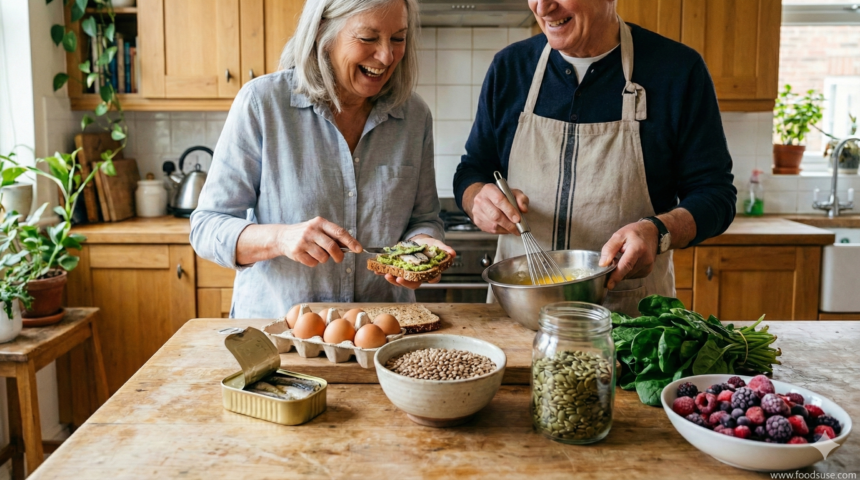
By The FoodsUse Editorial Team
We are living longer than ever before. But are we living better?
In 2026, the conversation around aging has shifted dramatically. It is no longer just about “Lifespan” (how many years you live). It is about “Healthspan”—how many of those years are spent in good health, with a sharp mind and a strong body.
For adults over 60, two silent enemies often shorten this Healthspan: Sarcopenia (age-related muscle loss) and Brain Fog (cognitive decline).
Here is the good news: You don’t need expensive supplements or complicated meal plans to fight back. Research suggests that the most powerful tools for independence are found right in your local grocery store.
This guide outlines the 2026 Healthspan Diet, featuring 7 affordable superfoods specifically chosen to protect your muscle mass and clear the mental fog.
What Is the Healthspan Diet?
The Healthspan Diet isn’t a restrictive weight-loss trend. Instead, it is a nutrition strategy focused on functional aging.
In 2026, nutrition science has moved away from simply counting calories. Now, the focus is on nutrient density. For seniors, this means every bite must work harder to provide the protein, omega-3 fatty acids, and antioxidants required to repair aging cells.
ALSO READ: 10 Everyday Foods That Are Secretly Ruining Your Health (And What to Eat Instead)
This approach prioritizes foods that:
-
Stimulate Muscle Protein Synthesis: To counteract the natural loss of strength.
-
Lower Systemic Inflammation: To clear “brain fog” and improve memory.
-
Are Budget-Friendly: Because maintaining your health shouldn’t drain your pension or retirement savings.
Why Muscle Loss & Brain Fog Accelerate After 60
To fix the problem, we must first understand it. Many seniors accept fatigue and weakness as “normal parts of aging,” but experts agree that much of this decline is preventable.
The Muscle Thief: Sarcopenia
Starting in your 40s, you naturally lose muscle mass. By age 60, this accelerates. This condition, known as Sarcopenia, is a leading cause of falls and frailty.
The problem? Older bodies become “anabolic resistant.” This means a 65-year-old needs more protein than a 25-year-old just to maintain the same amount of muscle. If you are eating the same way you did in your 30s, you are likely under-fueling your muscles.
The Clarity Killer: Brain Fog
Brain fog in seniors—forgetfulness, slow thinking, or lack of focus—is often linked to chronic low-grade inflammation and oxidative stress.
Your brain is an energy-hungry organ. Without the right fuel (healthy fats and antioxidants), the neurons struggle to communicate effectively, leading to those “tip of the tongue” moments.
The 7 Cheap Superfoods for Seniors
You have likely seen lists of superfoods featuring expensive items like Goji berries or fresh salmon.
The 2026 Healthspan Diet is different. These 7 foods are potent, scientifically backed, and incredibly affordable.
1. Canned Sardines or Mackerel
Best For: Brain Health & Joint Mobility
Fresh seafood is expensive. Canned oily fish is one of the best bargains in the supermarket.
Sardines and mackerel are packed with Omega-3 fatty acids (DHA and EPA). Research consistently links high Omega-3 intake to better memory preservation and lower rates of cognitive decline.
Key Nutrients:
-
Omega-3s (Anti-inflammatory)
-
Vitamin D (Crucial for bone density)
-
Calcium (from the edible soft bones)
Budget Tip: Buy in bulk online or at discount grocers. Canned fish has a long shelf life, so you never waste money on spoilage.
How Often: 2–3 times per week on toast or in salads.
2. Eggs (Don’t Skip the Yolk!)
Best For: Muscle Maintenance & Memory
For years, eggs were demonized for cholesterol. In 2026, nutritionists recognize them as nature’s multivitamin for seniors.
Eggs are a “complete protein,” meaning they contain all nine amino acids required to rebuild muscle. More importantly, the yolk contains Choline, a nutrient essential for producing acetylcholine, a neurotransmitter that helps regulate memory and mood.
Key Nutrients:
-
Leucine (The amino acid that triggers muscle growth)
-
Choline (Brain fuel)
-
Vitamin B12 (Energy)
How Often: 1–2 eggs daily (consult your doctor if you have specific lipid concerns).
3. Lentils and Beans
Best For: Steady Energy & Gut Health
If you suffer from afternoon energy crashes, lentils are your solution. They are the ultimate cheap superfood for seniors.
Lentils provide a massive dose of fiber. A healthy gut is increasingly linked to a healthy brain (the “gut-brain axis”). Furthermore, the slow-digesting carbohydrates in beans prevent blood sugar spikes, keeping your mental focus sharp throughout the day.
Key Nutrients:
-
Plant-based Protein
-
Fiber (Digestive health)
-
Folate (Cognitive function)
Budget Tip: Dried beans are cheaper than canned. Soak a bag overnight to save money and reduce sodium.
How Often: Add a handful to soups or stews 3–4 times a week.
4. Frozen Berries
Best For: Memory Protection
Berries are famous for their antioxidants, specifically flavonoids, which can delay brain aging. However, fresh berries can be prohibitively expensive out of season.
Frozen berries are often picked at peak ripeness and flash-frozen, locking in nutrients. They are cheaper than fresh and don’t spoil in the fridge.
RELATED POST: Why Ultra-Processed Foods Are Quietly Ruining Your Health in the U.S. and UK
Key Nutrients:
-
Anthocyanins (Potent antioxidants)
-
Vitamin C (Immune support)
How Often: A half-cup daily in oatmeal or yogurt.
5. Cottage Cheese
Best For: Nighttime Muscle Repair
To prevent muscle loss after 60, when you eat protein matters as much as what you eat.
Cottage cheese is rich in Casein protein. Unlike whey (found in milk), casein digests slowly, releasing amino acids into your bloodstream over several hours. Eating this before bed can help your body repair muscle tissue while you sleep.
Key Nutrients:
-
Slow-release Protein
-
Calcium
-
Selenium
Budget Tip: Store-brand cottage cheese is usually identical to name brands nutritionally.
How Often: A small bowl as an evening snack.
6. Pumpkin Seeds (Pepitas)
Best For: Deep Sleep & Magnesium
Many seniors suffer from poor sleep, which directly impacts memory and brain fog. Pumpkin seeds are one of the most affordable sources of Magnesium, a mineral that relaxes muscles and supports deep sleep.
They are also rich in Zinc, which is vital for immune function.
Key Nutrients:
-
Magnesium
-
Zinc
-
Healthy Fats
How Often: A tablespoon sprinkled on salad or soup daily.
7. Spinach (or Any Dark Leafy Green)
Best For: Cognitive Sharpness
A study by the American Academy of Neurology suggested that people who ate one serving of leafy greens a day had the cognitive function of someone 11 years younger.
Spinach is loaded with Vitamin K, lutein, and folate. These nutrients help slow the rate of cognitive decline.
Key Nutrients:
-
Vitamin K
-
Lutein (Eye and brain health)
-
Nitrates (Improves blood flow)
Budget Tip: Buy frozen spinach blocks. They are incredibly cheap and can be easily added to eggs or pasta sauces.
How Often: Aim for one serving daily.
Sample 1-Day Healthspan Meal Plan (Budget-Friendly)
Here is how you can combine these anti-aging foods into a simple day of eating that fights sarcopenia and brain fog.
Breakfast: The Brain-Booster
-
Omelet made with 2 eggs and a handful of spinach.
-
A side of oatmeal topped with frozen berries.
-
Why: High protein for muscle, antioxidants for the brain.
Lunch: The Energy Stabilizer
-
Lentil soup (made with dried lentils, carrots, and onions).
-
Whole grain toast.
-
Why: High fiber keeps you full and energized; low cost.
Snack: The Memory Mix
-
Small handful of pumpkin seeds and an apple.
-
Why: Magnesium and healthy fats.
Dinner: The Muscle Builder
-
Sardines on toast OR a pasta dish with mackerel and tomato sauce.
-
Steamed frozen broccoli.
-
Why: Omega-3s reduce inflammation before bed.
Evening Snack (Optional)
-
Small bowl of cottage cheese.
-
Why: Casein protein repairs muscle while you sleep.
Foods to Avoid After 60 That Accelerate Aging
While adding superfoods is crucial, removing the “aging accelerators” is equally important.
-
Sugary Beverages: High sugar intake shrinks the hippocampus (the brain’s memory center). Switch to water or herbal tea.
-
Processed Meats (Deli meats/Bacon): These are often high in sodium and nitrates, which can stiffen arteries and restrict blood flow to the brain.
-
Vegetable Oils High in Omega-6: Excessive consumption of cheap soybean or corn oil can increase inflammation. Try to cook with moderate amounts of olive oil or butter instead.
Common Myths About Aging & Diet
Myth 1: “It’s too late to build muscle after 60.” Fact: Absolutely false. While it is harder, seniors can absolutely build muscle through resistance training and adequate protein intake (specifically the sarcopenia diet approach).
Myth 2: “You naturally lose your memory as you age.” Fact: While processing speed may slow down, severe memory loss is often a sign of underlying issues (like vitamin deficiencies or inflammation), not normal aging. Nutrition plays a huge role in prevention.
Myth 3: “Healthy food is too expensive.” Fact: As shown in this article, foods like lentils, eggs, and frozen vegetables are some of the cheapest items in the store and are far healthier than processed ready-meals.
TRENDING NOW : 10 Home Remedies People Believe Can Fight Cancer in 2025/2026 — What Experts Say
Frequently Asked Questions (FAQ)
Q: How much protein should a 65-year-old eat daily? A: Research suggests seniors need more protein than younger adults—roughly 1.2 to 1.5 grams of protein per kilogram of body weight. For a 70kg (154lb) person, that is about 85–100 grams of protein daily.
Q: What is the number one vitamin for brain fog in seniors? A: Vitamin B12 is critical. A deficiency in B12 mimics dementia symptoms. Since absorption decreases with age, ensure you are eating B12-rich foods (like eggs and sardines) or consult a doctor about supplementation.
Q: Can I reverse muscle loss (sarcopenia) with diet alone? A: Diet is 50% of the equation. To actually reverse muscle loss, you must combine a high-protein diet with resistance exercise (like lifting light weights or using resistance bands). Food provides the bricks; exercise provides the labor.
Q: Are canned vegetables as good as fresh? A: Frozen vegetables are usually better than canned because they have no added salt. If you use canned vegetables, rinse them thoroughly with water to remove excess sodium, which can raise blood pressure.
Q: Is intermittent fasting good for seniors? A: Proceed with caution. While fasting has benefits, seniors need to eat frequent, protein-rich meals to maintain muscle mass. prolonged fasting can sometimes accelerate muscle loss in older adults. Always talk to your doctor first.
Conclusion: Start Your Healthspan Journey Today
The year 2026 is about taking control of how you age. You do not need a miracle cure to improve your quality of life.
By prioritizing foods to prevent sarcopenia and fueling your brain with cost-effective nutrients, you can protect your independence and vitality well into your 70s and 80s.
Start small. Buy a bag of lentils. Swap your morning cereal for eggs. Pick up a can of sardines. These small, cheap investments in your grocery cart today will pay massive dividends in your health tomorrow.
Disclaimer: This content is for informational purposes only and does not constitute medical advice. Always consult with a healthcare professional or registered dietitian before making significant changes to your diet, especially if you manage chronic conditions.
Found this guide helpful? Share this article with a friend or family member who wants to stay strong and sharp!
Be the first to get new scholarships, job updates, inspiring Fazza poems, lifestyle stories, and more — straight to your inbox.