

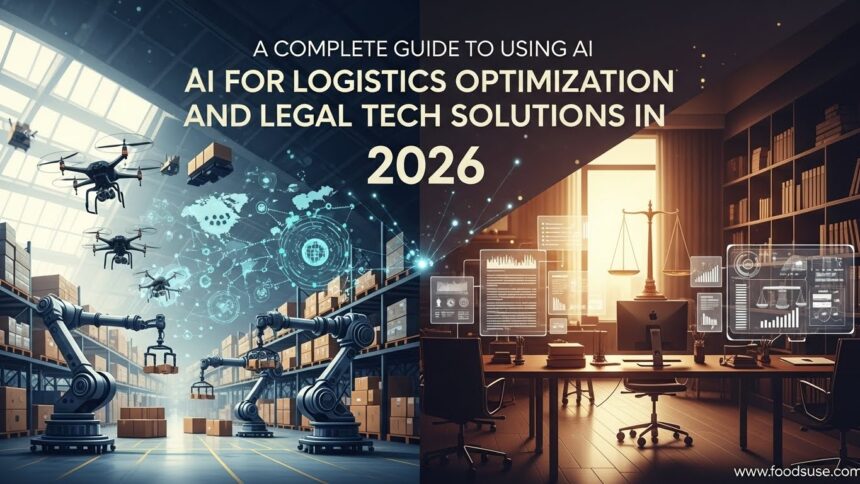
Artificial Intelligence (AI) has moved from being a futuristic concept to becoming the backbone of modern business operations in logistics, transportation, law, compliance, and workflow automation. As companies in 2026 face rising operational costs, intense global competition, and stricter regulatory requirements, AI is becoming the tool that helps them operate faster, smarter, and more efficiently. This guide explains exactly how AI transforms logistics optimization and legal tech solutions, using real-world examples, practical applications, and the most searched AI keywords businesses look for today.
Why AI Is Dominating Every Industry in 2026
AI adoption is growing for one core reason: it reduces cost while increasing productivity. Companies across the US, UK, Canada, Australia, Switzerland, and the EU are now investing in AI because it helps them:
-
Automate repetitive tasks
-
Predict outcomes using real-time data
-
Improve accuracy and reduce human error
-
Save time, money, and manpower
-
Provide insights that humans cannot detect
Today’s most searched keywords—AI tools, machine learning, AI automation, AI for business, best AI apps, AI workflow tools, and AI chatbots—reflect how deeply AI has integrated into everyday operations.
Part 1: Using AI for Logistics Optimization
Logistics sits at the center of global trade. Whether it involves warehousing, transportation, supply chain planning, inventory tracking, or freight management, AI now plays a major role in ensuring the movement of goods is seamless, cost-effective, and predictable.
1. Predictive Demand Forecasting
AI uses machine learning algorithms to analyze:
-
Consumer buying patterns
-
Seasonal trends
-
Market conditions
-
Transportation availability
-
Weather impact
This enables companies to avoid overstocking, understocking, and supply chain disruptions. AI demand forecasting is one of the most searched logistics technologies because it helps businesses save millions in storage and lost sales.
2. Smart Route Optimization
AI-powered route planning uses real-time data such as
-
Traffic
-
Road closures
-
Weather changes
-
Fuel levels
-
Delivery urgency
This allows delivery trucks, couriers, and shipping fleets to choose the fastest and cheapest route automatically.
Modern logistics companies rely on AI systems that learn from driver behavior and historical data, making route planning more accurate every month.
ALSO READ : AI Takes Over: 2025 Report Claims Millions Will Lose Their Jobs Before Governments Act
3. Warehouse Automation
AI-powered robots now handle:
-
Sorting
-
Packaging
-
Inventory counting
-
Shelf arrangement
-
Loading and unloading
AI reduces workplace accidents and increases speed and productivity. The most searched keyword in this space is AI warehouse automation, as more companies transition from manual to automated facilities.
4. Inventory Management Using AI
Inventory problems cost companies billions every year. AI solves this by:
-
Monitoring stock levels 24/7
-
Predicting when items will run out
-
Reducing expired goods or waste
-
Suggesting ideal reorder points
-
Automating vendor communication
This allows companies to maintain the perfect balance between availability and cost efficiency.
5. AI in Fleet Management
AI improves fleet management through:
-
Real-time driver monitoring
-
Predictive maintenance
-
Fuel usage analytics
-
Accident prevention systems
-
Smart scheduling
Predictive maintenance is especially important—AI can forecast engine failures before they happen, saving thousands in downtime and repairs.
6. Enhanced Customer Experience
Customers today want fast delivery and full visibility. AI improves customer satisfaction with:
-
Real-time delivery tracking
-
Automated notifications
-
AI chatbots for customer service
-
Faster complaint resolution
AI-powered customer support is one of the most searched business tools worldwide.
Part 2: Using AI for Legal Tech Solutions
The legal industry may be one of the slowest sectors to adopt technology, but 2026 marks a turning point. With rising caseloads, high documentation volume, and expensive labor hours, law firms and corporate legal departments are now using AI to automate tasks that were almost impossible to manage manually.
1. AI Document Review
This is one of the most transformative uses of legal AI. AI can:
-
Review thousands of documents
-
Identify key terms
-
Detect red flags
-
Highlight inconsistencies
-
Extract essential information
Tasks that normally take lawyers weeks can now be completed in minutes.
2. Contract Analysis & Automation
AI contract tools help with:
-
Drafting legal agreements
-
Reviewing clauses
-
Detecting risky language
-
Ensuring regulatory compliance
-
Suggesting revisions
These tools reduce errors and allow legal teams to focus on strategy instead of document formatting.
3. Predictive Legal Analytics
AI can predict:
-
Case outcomes
-
Litigation risk
-
Settlement probability
-
Jury tendencies
-
Historical patterns
Lawyers use predictive analytics to make better decisions and to guide clients with evidence-based predictions.
4. AI-Powered Legal Research
AI legal research assistants can search:
-
Court documents
-
Case laws
-
Regulations
-
Statutes
-
Precedents
…and answer legal questions in seconds.
The most searched keywords in legal AI include AI legal research, AI compliance tools, AI contract review, and AI legal assistant.
5. Compliance Automation
Every business must meet regulatory standards. AI helps companies stay compliant by:
-
Monitoring new laws and regulations
-
Tracking risk areas
-
Alerting violations immediately
-
Generating compliance reports
This reduces legal liability and prevents costly penalties.
6. AI for E-Discovery
During investigations or lawsuits, companies must gather and analyze large volumes of emails, documents, and digital records. AI makes discovery faster by:
-
Sorting data
-
Tagging relevant information
-
Removing duplicates
-
Identifying patterns
This dramatically reduces litigation time and cost.
7. AI Chatbots for Law Firms
AI chatbots can perform tasks such as
-
Client intake
-
Appointment scheduling
-
Answering legal inquiries
-
Providing document templates
Law firms in the US, Canada, the UK, Switzerland, and Australia are increasingly implementing AI assistants to reduce workload.
RELATED TOPIC >> Revealed: The Hidden Truth About Dubai Jobs in 2025 — Who’s Really Getting Hired and Why You’re Being Left Out
USA Job Grant Scandal 2025: Why Millions Are Missing Out on Visa Sponsorship Opportunities
Countries Leading AI Adoption in 2026
United States
The US remains the global leader in AI logistics and legal tech. American companies invest billions in warehouse robotics, self-driving trucks, and AI-powered compliance systems.
United Kingdom
The UK focuses heavily on legal tech innovation. London is home to dozens of AI-driven contract review startups working with major law firms.
Canada
Canada invests heavily in AI automation for supply chain and transportation due to its massive geography and cold-weather challenges.
Australia
Australian logistics companies use AI route optimization tools to cover long distances and improve delivery efficiency across remote areas.
Switzerland
Switzerland leads in AI compliance and legal technology because of its strict financial regulations and high legal standards.
Why Businesses Must Adopt AI Now
AI is no longer optional. Companies that delay adoption face:
-
Higher operational cost
-
Slower delivery times
-
Reduced competitiveness
-
Increased legal risks
-
Lower customer satisfaction
Businesses that invest now gain a major advantage over their competitors.
Be the first to get new scholarships, job updates, inspiring Fazza poems, lifestyle stories, and more — straight to your inbox.