

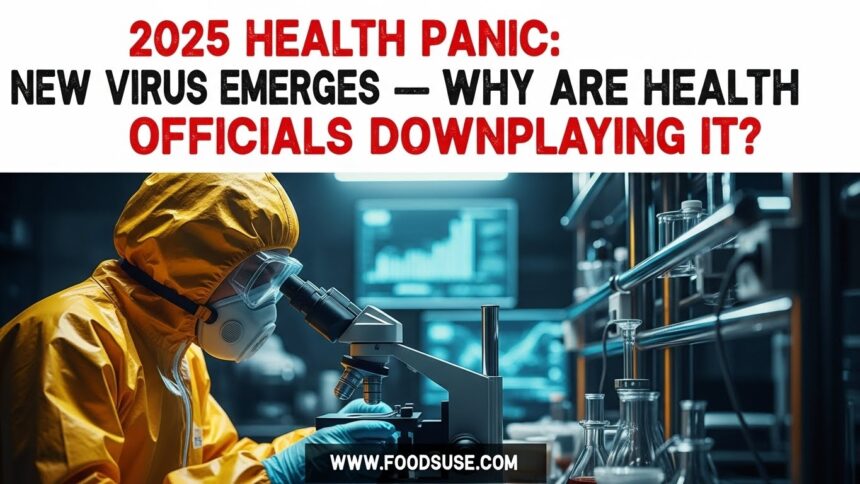
In early 2025, social media timelines, news portals, and online communities exploded with one trending topic: a newly detected virus and rising public fear. The panic spread faster than verified information.
But what truly fueled global suspicion was not the virus itself—it was the perception that health officials were being unusually quiet.
Why did this happen?
Why did global audiences feel something was being hidden?
And what does this mean for public trust, global health systems, and future outbreaks?
This detailed guide breaks down everything you need to know about the 2025 health panic, the communication gap, the public’s fears, and the real challenges health agencies face.
What Sparked the 2025 Health Panic?
Unlike past outbreaks, the 2025 panic wasn’t driven by a massive wave of infections.
Instead, it stemmed from three major triggers:
1. Early Reports Without Clear Information
Local medical research groups reported detection of an unfamiliar virus strain.
However, vital details—transmission rate, severity, symptoms—were not immediately released.
This silence created a vacuum.
And the internet hates a vacuum.
Speculation exploded instantly.
2. Conflicting Headlines From Global Media
Some media outlets used dramatic language, while others downplayed the issue.
The inconsistency made the public believe:
“Someone isn’t telling the full truth.”
3. Social Media Amplified Fear Faster Than Facts
Platforms like X (Twitter), TikTok, and YouTube became wildfire zones of:
-
unverified claims
-
homemade “analysis” videos
-
dramatic conspiracy theories
-
predictions of lockdowns
-
fear-based commentary
This overwhelmed official sources before they had a chance to release full data.
Also Read>> Mental Health A&E Units in the UK: What You Need to Know in 2025
Why Did Health Officials Appear to Be Downplaying the Situation?
It’s easy to assume governments were hiding something, but the truth is more complex.
1. Lack of Confirmed Scientific Data
Early-stage viruses can’t be analyzed overnight.
Health agencies often take weeks to determine:
-
transmissibility
-
mutation potential
-
risk groups
-
severity or fatality
-
recommended precautions
Communicating too early risks spreading incorrect information, which is even worse during a global panic.
2. Avoiding Mass Hysteria
Officials are aware that:
-
markets react
-
travel reacts
-
businesses react
-
social stability reacts
A premature announcement can trigger economic and social shockwaves.
Their goal:
Release information only when verified.
3. Avoiding the Mistakes of Previous Pandemics
In past global outbreaks, mistakes happened:
-
releasing early information that later changed
-
confusing the public with conflicting reports
-
creating mistrust due to lack of clarity
In 2025, health officials prioritized data first, communication second.
4. Controlling Misinformation
Downplaying does not mean hiding.
It often means delaying commentary until facts are stable.
Ironically, this attempt to prevent mixed messages caused even more public suspicion.
How the Public Reacted — Fear, Frustration & Distrust
2025 showed something important:
People fear silence more than danger.
Here are the three biggest public reactions:
1. Fear of Another Lockdown
After past global health crises, audiences instantly associated every new virus with:
-
lockdowns
-
travel bans
-
shortages
-
job losses
Even before any government mentioned restrictions, fear took over.
2. Distrust Toward Health Systems
Many people believed the silence meant something worse was coming.
Public sentiment online included:
-
“They’re hiding the truth again.”
-
“If it was nothing, they’d just say so.”
-
“Why are they acting suspicious?”
3. Panic Buying in Some Regions
Some local stores reported increases in purchases of:
-
masks
-
sanitizers
-
gloves
-
canned foods
-
household essentials
All triggered by fear, not actual government orders.
Trending post>> “10 Best Auto Insurance Companies in the USA & UK in 2025 — And Why Some Drivers Are Calling Them ‘Overrated’”
What Do Experts Say About Virus Communication in 2025?
Health communication experts worldwide agree:
1. Information Should Be Consistent
Contradictions between global agencies confuse the public.
2. Early Transparency Builds Trust
Even saying “We don’t know yet” is better than silence.
3. Public Education Must Improve
Most panic stems from a lack of understanding about:
-
how viruses behave
-
how long research takes
-
why early silence is normal
4. Social Media Needs Stricter Fact-Checks
Without proper verification, misinformation spreads faster than any virus.
The Role of Social Media Influencers in Amplifying Panic
A unique problem in 2025 is the rise of self-made “health analysts” online.
These influencers often:
-
post bold claims
-
use dramatic thumbnails
-
exaggerate risks
-
attract millions of views
-
misinterpret scientific terms
Even well-meaning creators can cause harm if they post incomplete or inaccurate information.
Social media experts warn that viral content often prioritizes emotion over accuracy, which intensifies panic.
Is the New Virus a Global Threat? What We Actually Know (Without Hype)
The most important thing readers want to know is:
Is this something to be worried about?
Here’s what experts typically confirm in early-stage discoveries:
-
New virus detection does not mean global spread.
-
Many new viruses each year never become dangerous to humans.
-
Research labs regularly track emerging strains.
-
Most detected viruses remain controlled or disappear naturally.
-
Global health systems in 2025 are faster and more equipped than ever before.
So yes, early media panic often exaggerates the situation.
Why Do Headlines Become So Dramatic? The Business Side of News
This may be the least-discussed—but most honest—reason behind the panic.
1. Fear Gets Clicks
News outlets earn revenue through:
-
clicks
-
ads
-
engagement
-
shares
A calm headline rarely goes viral.
2. Competing News Platforms Escalate Language
When one outlet publishes a dramatic piece, others follow to stay competitive.
3. Viral Content Rewards Sensationalism
Even if the actual risk is low, dramatic headlines outperform factual ones.
So while the virus itself may not be a global threat, the attention economy ensures the panic spreads widely.
How to Stay Safe (Without Falling for Panic or Misinformation)
Here are smart, non-hyped steps recommended by credible health professionals:
1. Follow Verified Sources Only
Stick to:
-
national health agencies
-
global health organizations
-
licensed medical professionals
2. Avoid Overreacting to Social Media Trends
Trending videos are often made for views, not accuracy.
3. Wait for Official Data
Scientific confirmation takes time.
Patience is key.
4. Keep Normal Hygiene Practices
Simple habits are still the best protection:
-
wash hands
-
avoid touching face
-
stay home when sick
5. Avoid Spreading Unverified Claims
Sharing rumors can cause unnecessary fear in your community.
A Must Read>>
Mental Health Hospital UK for Low-Income Patients: How to Get Free or Affordable Help in 2025
Final Thoughts: Is the Panic Worse Than the Virus?
The 2025 health panic revealed one major lesson:
Public fear grows when official information is slow, unclear, or inconsistent.
While the new virus discovery raised reasonable concern, the reaction was driven more by communication gaps and online speculation than by real danger.
Governments, health agencies, and media platforms must learn from this event:
-
be transparent
-
communicate early
-
provide consistent updates
-
counter misinformation quickly
In 2025 and beyond, trust is the most powerful tool in global health management.
Without it, even minor discoveries can trigger global fear.
Be the first to get new scholarships, job updates, inspiring Fazza poems, lifestyle stories, and more — straight to your inbox.